What the work costs the neighborhood
Budgets and schedules are only part of the ledger. These pages track the other costs: noise, closures, lost green space, and lost business. Every claim is labeled by its evidence: documented means agency records or press, resident-observed means dated photos, measurements, or logs kept by neighbors, and anything we cannot yet support stays off the site.
-
Noise and construction hours
The environmental review assumed a single 7 AM to 3 PM shift. The agency's own notifications now describe double shifts to 11 PM, seven days a week. The full record, charted.
-
Closures and access
Each closure was announced with a duration. This page holds every promised window against what actually happened, including what the word reopened has been stretched to mean.
-
Trees and green space
Lawn square footage and tree counts, before and after, in the agencies' own numbers: Wagner's halved-then-restored lawn, and 500 mature trees against 525 promised saplings.
-
Business and street life
The rink's open question, the deserted waterfront dining rooms, the marina, and the ticket hustle at The Battery's narrowed gates.
-
The dark windows ledger
Pier A, the Wagner Hotel, the West Thames grocery: the spaces standing empty for six-plus years, and what the construction era means for their revival.
-
Schools and kids
Five schools along the alignment, noise leading the complaint log, and the neighborhood's children's spaces closing in sequence, Wagner then Rockefeller.
What it looks like
The work as residents meet it on the waterfront, and the flood it is meant to stop.
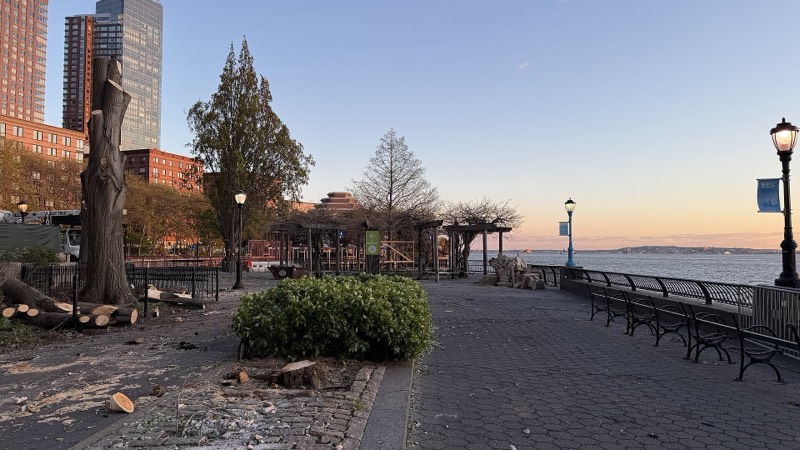
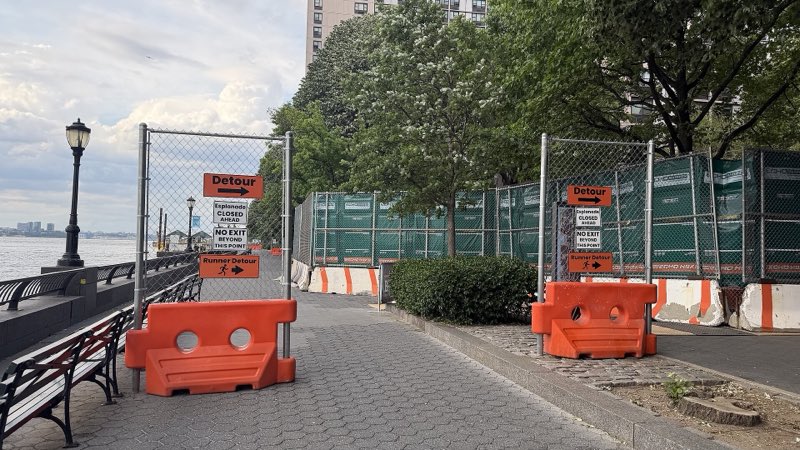
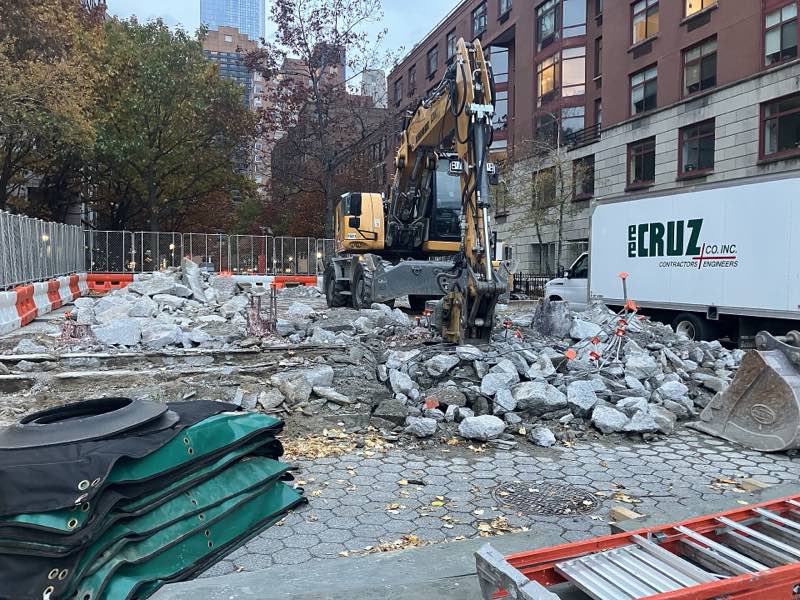
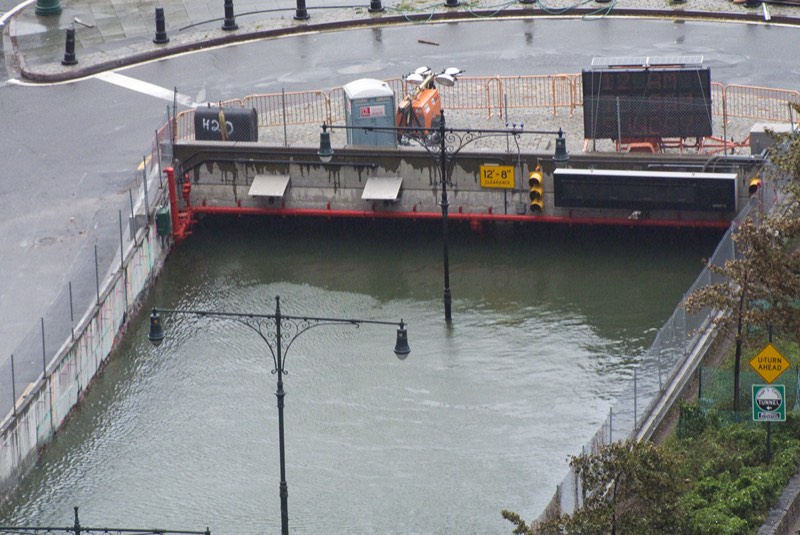
Case files
Single stories that show how the pattern works, assembled date by date from the record.
-
The Upper Room
Battery Park City's first public artwork, appraised at $1.5 million, stood 39 years at Albany Street. Ten days after the neighborhood learned demolition was imminent, it was rubble.
-
The Wagner Park pavilion
A restaurant that closed in 2022 for a park promised back in 2024, an RFP that drew zero responses, a rooftop that arrived in late 2025, and a dining room with no opening date as of October 2026.