A childhood under construction
Battery Park City's schools sit directly along the North/West alignment, and the spaces where its kids play are closing in sequence: Wagner Park for 32 months, the ball fields for two seasons of barrier work, and next the neighborhood's biggest playground. A kid who started kindergarten the fall Wagner closed will be in middle school before the North/West work ends.
28 months
of closures scheduled for Rockefeller Park from spring 2028, the neighborhood's biggest children's space
On the record already
From the project's own advisory-committee materials.
- At the first Construction Advisory Committee meeting, noise, dust, and vibration near schools and playgrounds led the quality-of-life concerns, with residents naming the area around BMCC and P.S. 89 and asking for proactive coordination with P.S./I.S. 276, P.S. 89, I.S. 289, and Stuyvesant High School.
- By January 2026, air, noise, and vibration mitigation accounted for about a third of all community inquiries to the project team.
- The project's noise commitment for the school corridor is the citywide default, weekdays 7 AM to 6 PM, the same baseline the South BPC project started from before its documented escalation to double shifts and weekends. The noise page tracks both.
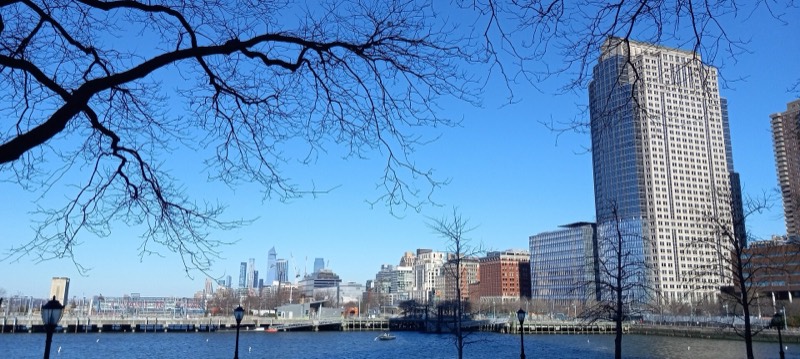
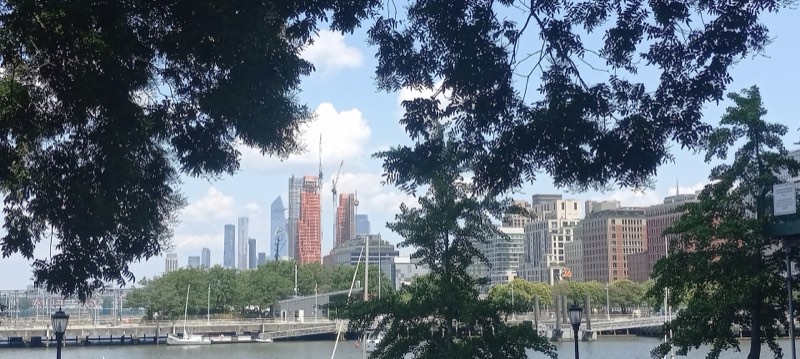
The play spaces, in sequence
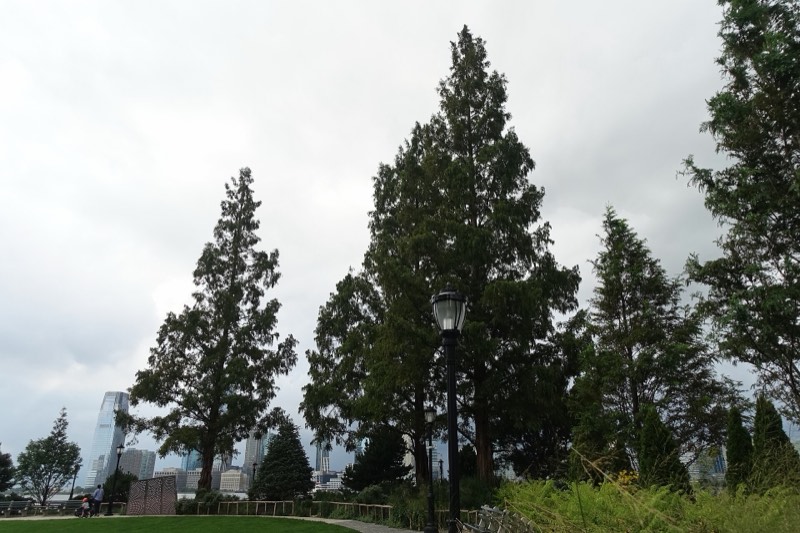
Rockefeller Park, its playground, and its ball courts are scheduled to close for about 28 months of North/West work beginning in the second quarter of 2028, the BPCA says; this fall the playground and courts are open. The BPCA chose a lightest-touch design for the park itself, keeping lawns, playground layout, and existing trees, which means the neighborhood loses years of access to its most-used children's space largely to put back what is already there. The environmental review's own open-space analysis, in our archive, is the baseline we will hold the phasing to.
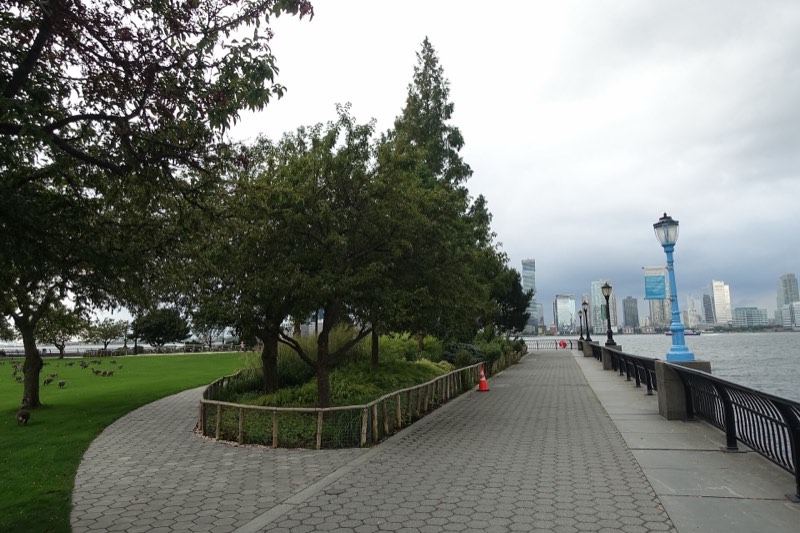
The enrollment question, answered with data
The claim worth testing: that construction-era disruption is pushing families, and enrollment, out of the neighborhood's schools. We said we would publish the public data whichever way it points. Here it is: through 2024-25 it did not point that way, and in 2025-26 the school closest to the work had the sharpest drop in the series.
Total enrollment by school year
| Year | P.S./I.S. 276 | P.S. 89 | I.S. 289 | All District 2 |
|---|---|---|---|---|
| 2017-18 | 827 | 433 | 283 | 62,340 |
| 2018-19 | 849 | 456 | 284 | 61,914 |
| 2019-20 | 854 | 454 | 276 | 61,801 |
| 2020-21 | 791 | 340 | 263 | 59,480 |
| 2021-22 | 725 | 347 | 236 | 56,718 |
| 2022-23 | 713 | 340 | 239 | 55,347 |
| 2023-24 | 810 | 330 | 258 | 55,538 |
| 2024-25 | 792 | 340 | 255 | 55,424 |
| 2025-26 | 705 | 343 | 248 | 53,739 |
What the numbers show through 2025-26: the pandemic is the cliff in every line through 2021-22. After it, P.S./I.S. 276, the school closest to the South BPC work, rebounded from 713 to 810 in 2023-24, its best year since 2019, while District 2 as a whole stayed flat. Then it slipped to 792 in 2024-25 and fell to 705 in 2025-26: 87 fewer students, 11 percent, its largest one-year drop and its lowest count in the nine years shown, with 75 of the 87 in kindergarten through grade 5. District 2's schools fell 3 percent that year and P.S. 89 held at 343, while I.S. 289 eased to 248. The 2025-26 count was taken on October 31, 2025, just before North/West construction began that November, and one year cannot show why: kindergarten cohorts, zoning, and a citywide decline of 2.4 percent all move these numbers. This table updates when the next snapshot does. Total enrollment per DOE demographic snapshots, counted on the October 31 audited register (November 13 in 2020-21 and November 12 in 2021-22, a pandemic delay). 2017-18 and 2018-19 from the NYC Open Data snapshot (c7ru-d68s); 2019-20 through 2023-24 from the DOE InfoHub workbook of 2024, since removed from InfoHub and archived in our reference library; 2024-25 and 2025-26 from the InfoHub workbook dated August 20, 2026. The years these sources share agree exactly for all three schools. District 2 is the sum of all 02M schools in the same sources. The 2026 workbook leaves out schools closed before 2025-26, so the 2023-24 to 2024-25 step drops City Knoll Middle School (171 students in 2023-24); on a constant list of schools that step is a rise of 57. The DOE's own district total, which also counts pre-K centers and programs, was 56,856 in 2024-25 and 55,712 in 2025-26.
Still being assembled
- resident-observed Families weighing whether to stay through a decade of construction, and what that means for future enrollment. The data above cannot see decisions being made now; the next DOE releases can.
- resident-observed Rerouted school walks and the everyday quality-of-life tradeoffs: longer paths around fencing, lost shade, sidewalk crowding where bike and running traffic was displaced. Photo and route documentation being compiled.