The Upper Room: 39 years, ten days' notice
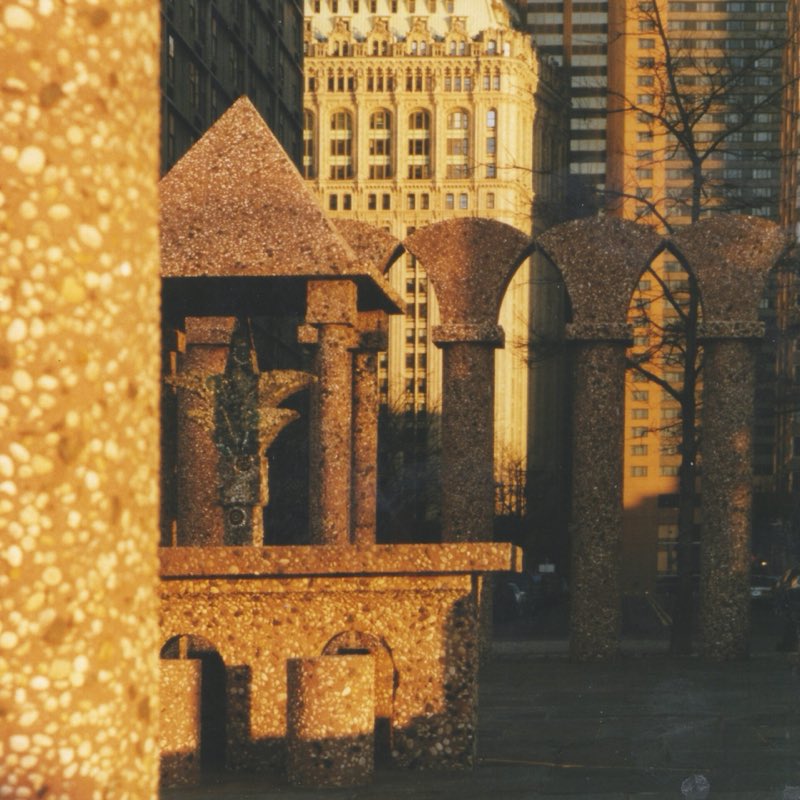
Ned Smyth's Upper Room, a colonnaded sculptural court of concrete and mosaic, was Battery Park City's first public artwork and one of its oldest gathering places: chess games, birthday parties, potluck suppers, a pandemic-era refuge. The North/West project sited the Albany Street tide-gate chamber beneath it. It was demolished on November 12, 2025.
10 days
between The Broadsheet reporting demolition was imminent and the jackhammers, November 2 to 12, 2025
Before and after
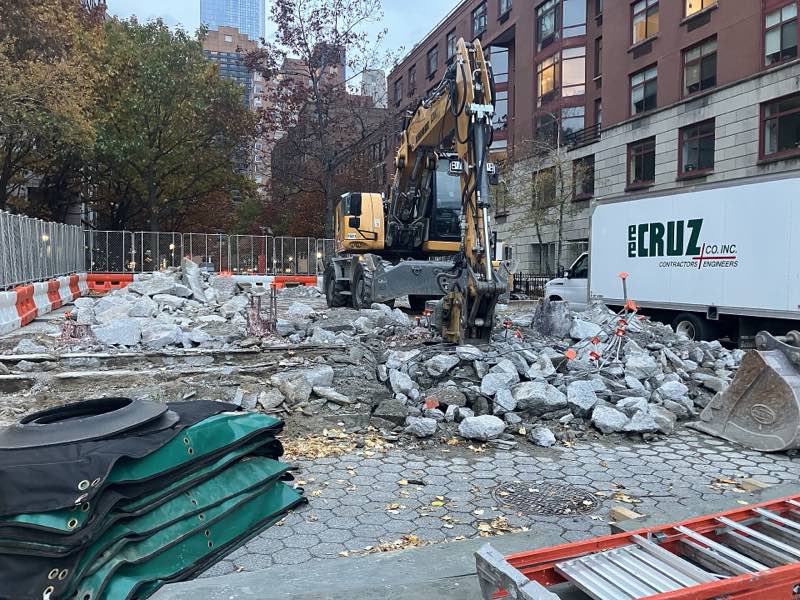
The Upper Room in December 1998, and its site two days after the demolition.
The sequence
1987
Upper Room is installed at the western end of Albany Street, the first artwork commissioned for Battery Park City's public spaces.
2019
The work is appraised at $1.5 million.
2023 to 2025
The North/West design places a large underground tide-gate chamber at Albany Street, directly beneath the artwork. Community Board 1 members urge the BPCA in multiple public meetings to explore every possible option to preserve it. The artist proposes relocation, to Governors Island's art spaces or the meadows along the West Side Highway. The BPCA's position: the work can neither be protected in place nor relocated, because its columns are rebar-filled and would not survive the move.
Late Oct 2025
A public farewell ceremony is announced. The BPCA says discussions with the artist and community have been underway for more than a year.
Nov 2, 2025
The Broadsheet reports the artwork is closed and slated for demolition soon, with no date given.
Days before Nov 12
An art-transport specialist independently evaluates the site and offers his firm's help removing and storing the work's elements. The offer comes too late to act on.
Nov 12, 2025
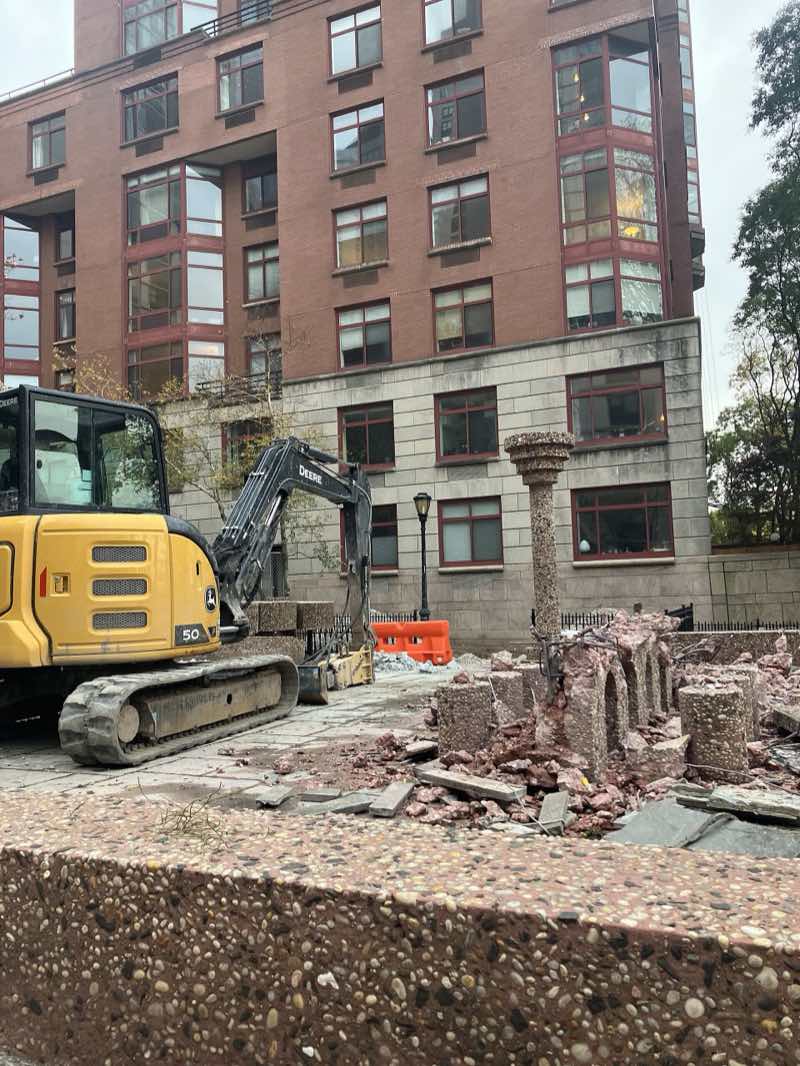
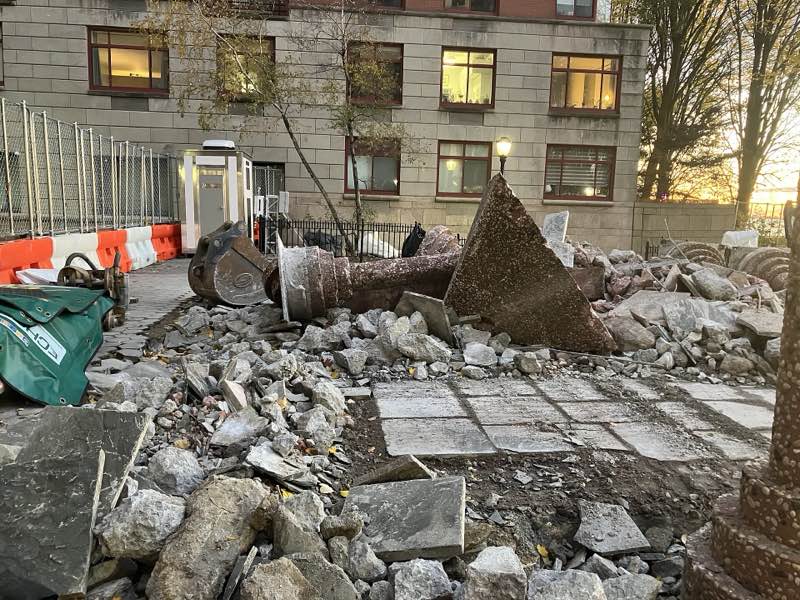
At 8 AM, jackhammers begin pulverizing the installation. By day's end the Upper Room is rubble.
Two days in November
Demolition began at 8 AM on November 12, 2025; by the next evening a column lay in the rubble.
Why it matters for the ledger
The Upper Room is the clearest case of how removal decisions have moved here: the constraint was set early and quietly by infrastructure siting, the public discussion happened after the outcome was fixed, and the window between the neighborhood understanding that demolition was imminent and the demolition itself was ten days. Whatever the engineering merits, a $1.5 million public artwork and a 39-year-old community space left the neighborhood on that timetable, and offers of professional help to save its pieces arrived inside a window too small to use.
- Upper Limit, The Broadsheet
- Upper Room Laid Low, The Broadsheet
- From auspicious success to complete rubble, The Cultural Landscape Foundation, with the $1.5M appraisal
- Massive 40-year-old sculpture demolished, ARTnews
- Upper Room, BPC's popular first public art, being torn down, New York Almanack
- The Upper Room, BPCA's own page for the work
Still being assembled
- resident-observed The precise fencing chronology in the artwork's final days, and the community offers to fund relocation rather than accept demolition. Being reconstructed from contemporaneous notes and photos before publication.